ABOUT & SUPPORT

Curiosity,
with a purpose.

Conversations and writing about how people become who they are. A growing body of work, and an ambition to help worthwhile questions become shared inquiry.

WHERE I HOPE THIS LEADS

From conversation
to new knowledge.

I want people to leave a conversation understanding something more clearly, with a useful connection or a question they want to pursue.

The episodes and writing are where I begin. Over time, I want Might Ramble to help ideas travel between people who could do something with them.

An imagined path: two people in conversation become a circle of relationships, branching questions, a structured experiment, and an expanding field of knowledge.
  1. 01ConversationListen closely.
  2. 02RelationshipBuild trust.
  3. 03HypothesisMake it testable.
  4. 04ExperimentPut it to the test.
  5. 05New knowledgeShare what we learn.
A path I want to make possible. Moving along it takes willing people, relevant expertise, and the resources to follow through.

THE WORK TODAY

Make something
worth spending time with.

Carefully prepared conversations and essays that connect lived experience with scientific insight. Work that helps someone understand, feel less alone, or ask a better question.

Explore the work

WHAT I WANT TO EXPLORE

Bring the right people
into the conversation.

People in different disciplines can be asking related questions without knowing the other exists. I want to recognize connections worth making and help people explore them together.

Sometimes I can contribute to the science. Sometimes the useful thing is an introduction.

THE LONGER AMBITION

Give the question
somewhere to go.

I want Might Ramble to become part of how the science happens. The aim is to help relationships and careful inquiry grow into research when the question, expertise, and resources fit.

The form is still taking shape. The next step should follow from a worthwhile question.

PUTTING THE MIDDLE STEPS TO WORK

A connection needs
someone to follow through.

I want to get good at understanding what people are working on, making thoughtful introductions, and helping a promising conversation lead somewhere.

Four abstract stages: understand two people, invite a connection, prepare a shared conversation, and follow through.
  1. UnderstandLearn what each person is trying to solve.
  2. InviteOffer a connection both people want.
  3. PrepareBring context and a worthwhile question.
  4. Follow throughClarify the next step and who wants to take it.
An intended practice, still taking shape through the work.

TOOLS & ATTENTION

A good introduction
is only the beginning.

A cyan grid supports a lavender circle of connected points: tools supporting work among people.
Tools that support the work.People who choose what follows.

AI is expanding what we can search, compare, explain, and work through. I want to use that capacity to read more widely, test my understanding, and arrive with questions worth someone’s time.

A promising connection still asks something of the people involved. They have to see why it matters, trust the invitation, and decide to give it their attention. Someone has to understand their different priorities, translate without flattening the science, and help a disagreement become something they can work on.

That is a craft I want to develop. Learn enough of each person’s language to recognize a useful connection. Give an uncertain idea room to be said aloud. Encourage someone when the work stalls, ask the difficult follow-up, and help everyone leave knowing what they have chosen to do next.

Research on teams links psychological safety with learning. Research on social networks suggests that people connected across groups can encounter ideas their own circles miss. These findings give me reasons to take the work of bringing people together seriously. The practical value has to be earned in each relationship.

AI can already persuade people in some settings. I want to become someone others know, question, and hold responsible. That takes understanding the stakes, staying with the work, and helping people turn curiosity into something they choose to do together.

The research behind this thinking

Amy Edmondson’s study of 51 manufacturing teams found an association between psychological safety and learning behavior. It gives a useful reason to make room for questions, uncertainty, and speaking up.

Ronald Burt’s study of managers and their networks linked connections across groups with ideas evaluated as valuable. It supports looking beyond one familiar circle. It does not establish that any particular introduction will succeed.

Salvi and colleagues’ 2025 experiment found that GPT-4 could be persuasive in structured online debates. Persuasion in that setting and sustaining a research collaboration are different questions. The approach above is my intended practice, informed by these studies.

CURIOSITY ACROSS BOUNDARIES

Different lives.
Questions that travel.

An addiction researcher, an athlete, and an artist bring different forms of expertise. Each has learned to notice things that can be difficult to see from outside their work. I want to understand those ways of seeing well enough to recognize where they might become useful to someone else.

Someone can care deeply about a question without knowing its technical vocabulary or having access to the journal where it is being discussed. A conversation can offer a way in through an example, a story, a careful explanation, or simply the chance to ask what something means.

A person may arrive for a guest they recognize and find themselves curious about addiction, identity, or the brain. A scientist may encounter a lived experience that changes the question they want to ask. Those are possibilities I want the range of the show to open. Scientific claims still need scientific evidence. Experience helps us notice what deserves a closer look.

THE PERSON BEHIND THE PROJECT

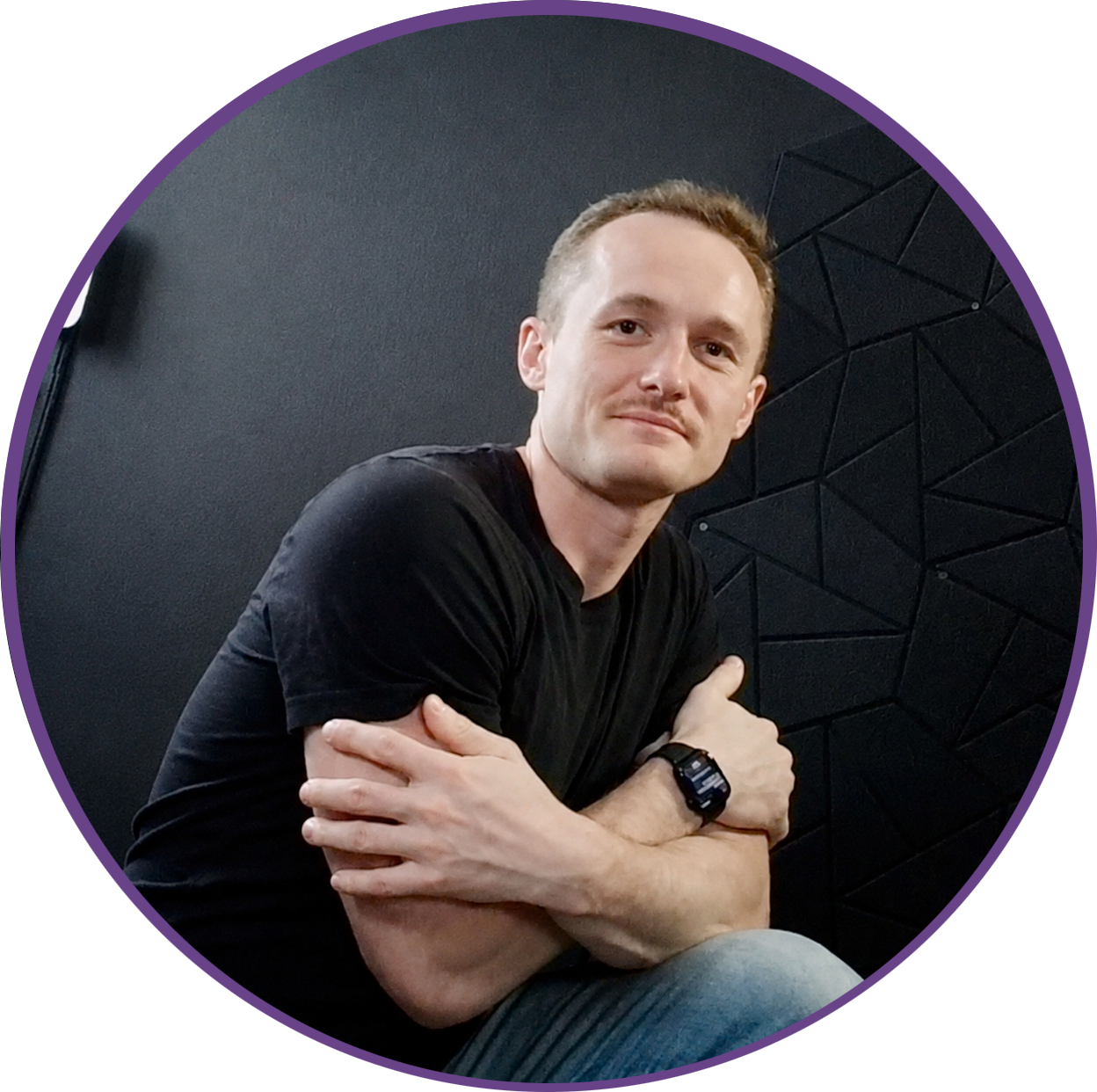
Mitchell Penningroth

Mitchell
Penningroth

Google Scholar

Scientist, writer, and host.
Building a place for people to think together.

MA in Chemistry
Brown University
B.S. Chemistry
University of Minnesota
Texas, with a star at AustinBased in
Austin, Texas

I’m 29. My formal training is in chemistry. My work and study now reach into biology and neuroscience. Addiction, recovery, PTSD, and mental illness in the lives of people I love have given those subjects a very personal weight.

I began Might Ramble in 2025 after leaving my PhD program and getting sober. My sober date is June 13, 2025. I research, schedule, and host the conversations, write the essays, and produce the episodes, animations, and artwork. I’m learning the craft as I go.

There’s a little Roy Firestone in the ambition. In The Art of the Interview, Lawrence Grobel describes the sports interviewer researching, writing, arranging access, editing, and replaying interviews to learn from them. That seriousness about the whole craft appeals to me. When the production department is largely one person, you become quite well acquainted with everyone responsible for your mistakes. I want to know each part well enough to make the next conversation better.

I want the work to help someone recognize an experience, encounter an idea they would otherwise have missed, or find a person worth thinking with. Over time, I hope some of those conversations become relationships and research.

A PERSONAL REASON

The two
of us.

My twin was diagnosed with schizophrenia in the fall of 2023, just as I was beginning my PhD at Brown University. It changed what I wanted my work to be for.

I began moving from chemical biology toward neurobiology, with no neuroscience background to fall back on. That has meant learning new foundations, asking for help, and spending a great deal of time finding out what I don’t know. I’m still doing that.

I want him to have the best care we can make possible, and a life with room for joy, connection, and things to look forward to. We have a long history together. I want us to make the most of the life still ahead of us.

Might Ramble is part of how I’m working toward that future. Support here helps sustain the preparation, writing, and conversations as I build the skills and relationships to contribute more.

Help sustain the work
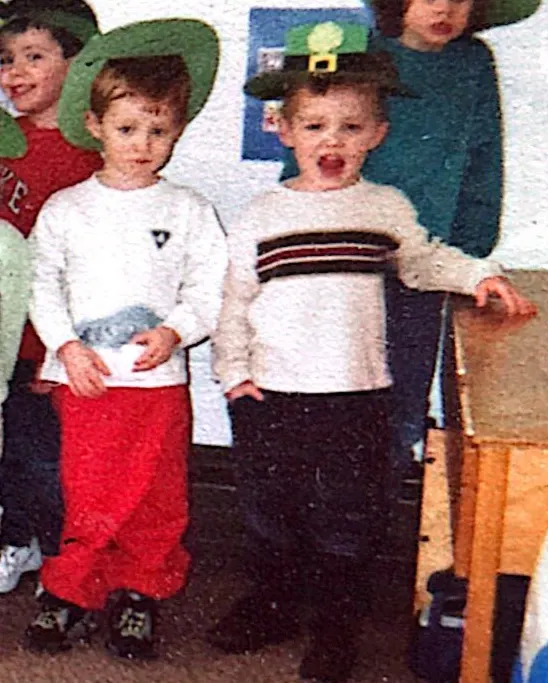
Mitchell, on the left, and his twin as children, wearing green hats around 2002.
My twin and I in approximately 2002. I’m on the left, he’s on the right — handedness on point, I guess.
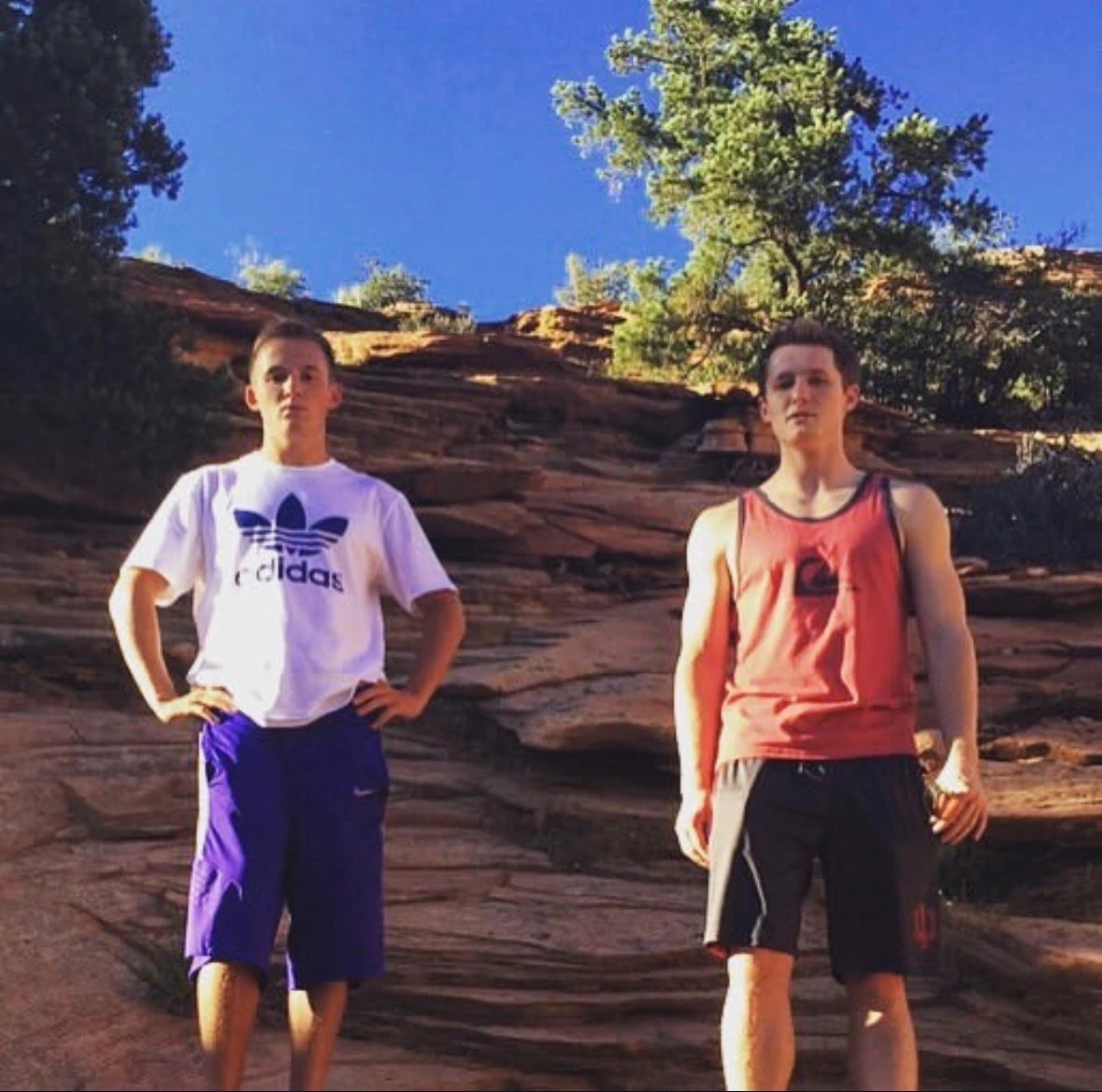
Matthew on the left and Mitchell on the right, standing in front of red rock and trees at Zion National Park in 2015.
2015, Zion National Park. We were 18. Matthew is on the left, I'm on the right.
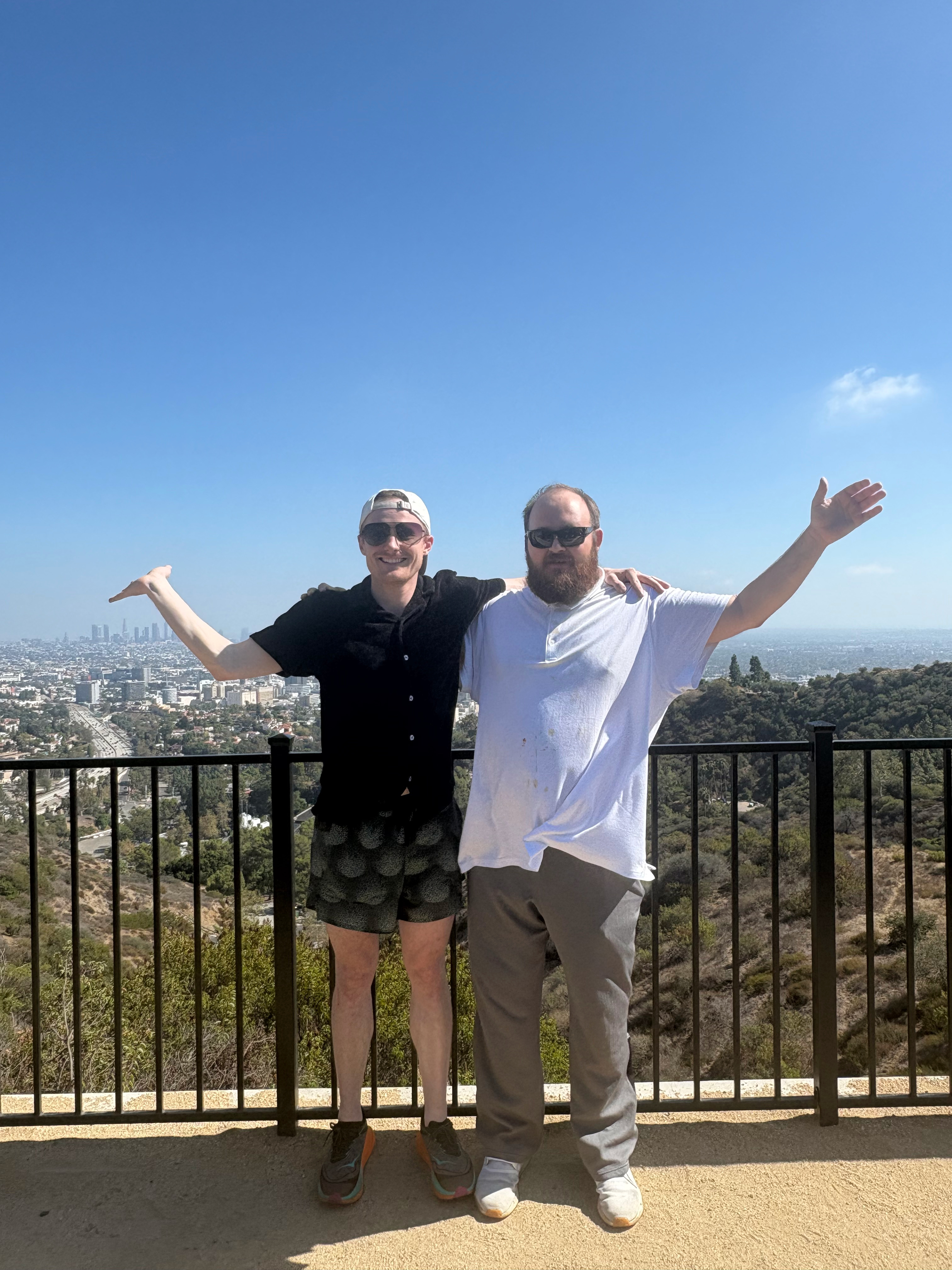
Mitchell, on the left, and his twin standing together at a scenic overlook in 2026, with their arms outstretched.
My twin and I, 2026. Handedness still on point.

A few reasons
I keep showing up.

This began partly as a way to rebuild my own life. It has become a place to learn, make useful work, and take a larger aim seriously. These six threads keep bringing me back.

Make sense of my own life.

I started writing because I needed to sort through what I had lived and work out what I thought. A page gave me something I could return to. Writing helped me find connections I could not see while everything was circling in my head. It also gave me a place to question my own explanations and imagine what might come next. I kept writing.

Follow the questions properly.

My curiosity has never been especially tidy. I was already reading papers, chasing references, and wondering how people became who they were. The show gives me a reason to ask people who know things I don’t, find out what I’ve misunderstood, and follow a question further. Writing makes me slow down and turn that curiosity into something another person can use.

Find out what I can do.

For a long time I treated feeling ready as a prerequisite. A convenient arrangement, really. In 2025, I had to build a different life anyway, so I began sharing the writing and starting conversations. I want to become a better interviewer, writer, and scientist. Preparing, making the work public, and listening back give me something concrete to improve. I would like to find out what I can do by doing it.

Make the work useful.

There are people I love whom I cannot make well. My twin’s schizophrenia is a particular reason I care about the science and the everyday reality of living with these conditions. He did not choose this illness. I want to help make that reality better understood and contribute, where I can, to work that might improve care. Sometimes that contribution may be scientific. Sometimes it may be helping the right people find one another.

Build a life I want to stay present for.

I need to be sober to give this work my full attention, day after day. The work also helps me protect that sobriety. I talk openly about recovery, prepare for conversations that matter to me, and build relationships with people who know what I’m trying to do. That gives my days structure and leaves me fewer places to hide from myself. It is one part of a life I want to keep showing up for, alongside the care and support my recovery needs.

Give myself more ways forward.

I want a working life that depends on more than one employer, one boss, or one set of circumstances. A catalogue of my own gives people something they can judge for themselves, without waiting for a job title or institutional introduction. The craft travels with me, and relationships across different fields can open more ways forward. Universities, labs, companies, and independent collaborators can all be part of that life. I want fewer decisions about my future resting with any one person.

Where I hope this leads

THE LEARNING CURVE

The skills behind
the work.

One project asks for a lot of different crafts. Some I practice every week. Others I’m deliberately learning from the beginning.

Choose a skill to see what I’m working on.

01 / INTERVIEWING

Good preparation makes room for a real conversation.

Interviewing well reminds me of good work at the bench. The more carefully I understand the material before I begin, the more room I have to think when something unexpected happens. Preparation helps me recognize a surprising answer, follow its implications, and change direction without losing the question.

I want to be a partner in someone’s own understanding of themselves. That takes enough preparation to follow their thinking, enough attention to notice when it changes, and enough openness to let them correct my picture of who they are. The hope is that we can think together and arrive somewhere neither of us had entirely mapped out.

What I’m practicing Deeper preparation, more patient follow-ups, and leaving room for silence.

Hear the conversations

02 / SCIENCE WRITING

Translate the expertise. Keep the meaning.

I want to give people words for something they have experienced and a way into ideas they might otherwise never encounter. That means understanding a piece of science well enough to explain what it shows, how the researchers reached it, and what remains uncertain.

Much of the work is deciding which detail makes the mechanism understandable, which analogy helps, where a qualification belongs, and how to bring the reader back to a human question. I want the writing to reward curiosity without requiring a specialist’s vocabulary.

What I’m practicing Tracing references, explaining mechanisms, writing for the ear, and revising until the thread is clear.

Read the essays

03 / INVESTIGATIVE JOURNALISM

Learn how to find out — and make the answer checkable.

If I want this work to improve understanding of mental health and care, I need to be able to follow questions through the institutions, incentives, decisions, and everyday experiences that shape them. Investigative skills can help me find records, reconstruct a timeline, ask whose perspective is missing, and test an explanation against evidence.

That would make me more useful as an interviewer and a potential research collaborator. A question that survives careful checking is a stronger place to begin. So is a clear account of what the available evidence cannot yet answer.

The learning path Start with reporting methods and ethics, learn to use public records and verify claims, then practice the whole process in a small investigation.

On the agenda Story-Based Inquiry, GIJN’s introductory training, the SPJ Code of Ethics, The Investigative Reporter’s Handbook, and The Art of Access. These readings and exercises are still part of the plan I’m working toward.

04 / PRODUCTION

Make the finished work easy to enter.

Scheduling, recording, sound, editing, mixing, artwork, and publication all stand between a conversation and a finished episode. I currently do that work myself. Each choice affects whether someone can settle into the conversation and stay with it.

I’m learning to make the process more reliable while keeping the life in the recording. Better systems should leave more time for the research, writing, and attention that made the episode worth producing.

What I’m practicing Clearer sound, deliberate edits, dependable recording habits, and a production process I can sustain.

Explore the episodes

05 / ANIMATION & VISUAL EXPLANATION

Use a picture to make the thinking clearer.

I make the episode artwork, diagrams, and animations around Might Ramble. I want someone to be able to see a connection, a mechanism, or a change unfolding over time, and hold the idea in mind.

I’m learning when a still image is enough, when motion explains something, and how to keep labels, timing, and visual emphasis aligned with the science. The visual work should invite a closer look and reward it with understanding.

What I’m practicing Visual storytelling, diagram design, motion, and checking what an image might accidentally imply.

Explore the drawing

06 / SCIENTIFIC DEPTH

Build the knowledge that good questions depend on.

Chemistry is my formal foundation. Moving toward biology, neuroscience, and mental health has meant reading, working through unfamiliar methods, following references, asking for help, and learning from people doing the research.

I want enough depth to recognize a useful connection and enough judgment to know when I need another person’s expertise. Understanding a result also means understanding the model, population, and assumptions that limit what it can tell us.

What I’m practicing Sustained study, critical reading, research relationships, and questions precise enough for a specialist to do something with.

Follow a question

About the show.

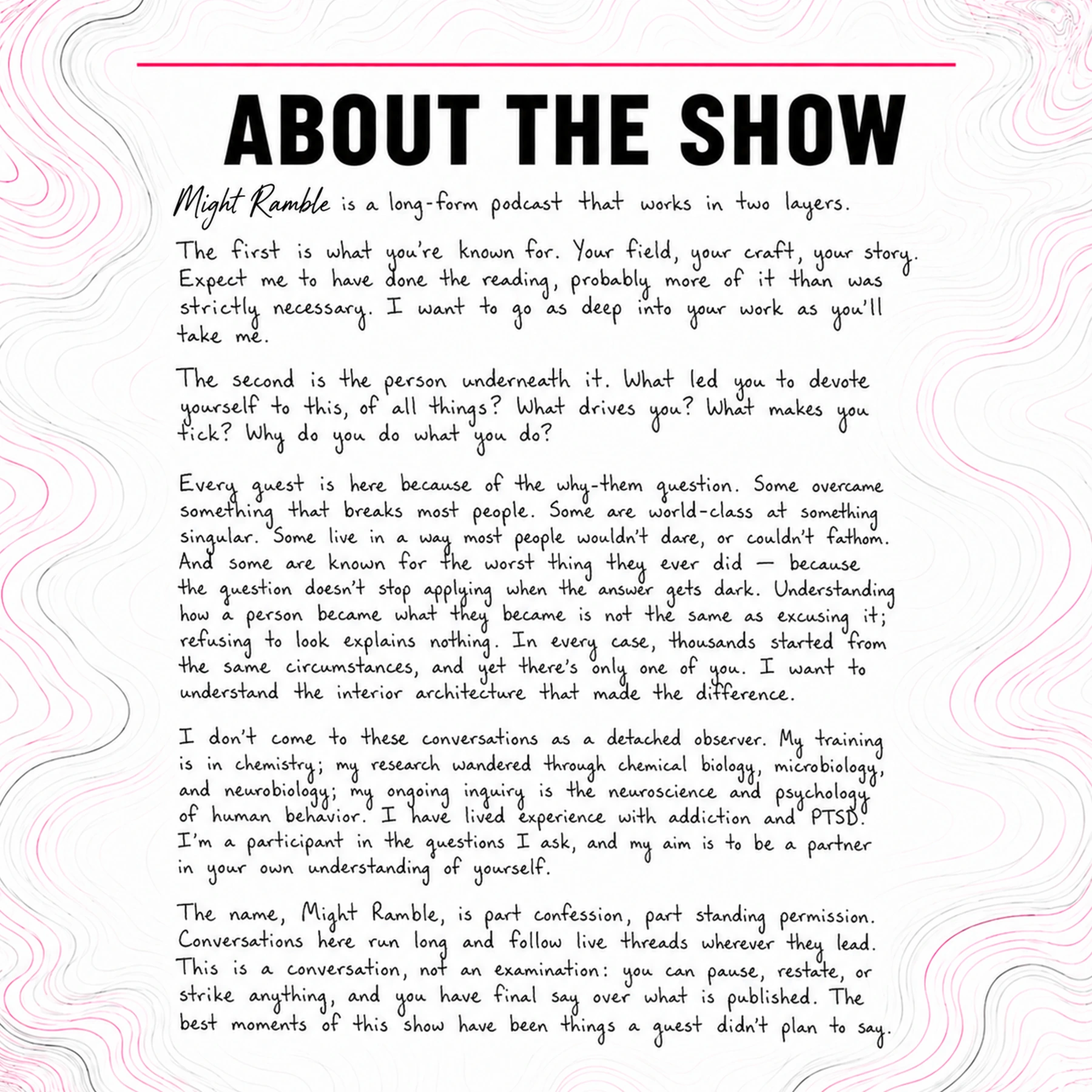
Mitchell’s handwritten About the Show page. The full text is available directly below.
Read the text

Might Ramble is a long-form podcast that works in two layers.

The first is what you’re known for. Your field, your craft, your story. Expect me to have done the reading, probably more of it than was strictly necessary. I want to go as deep into your work as you’ll take me.

The second is the person underneath it. What led you to devote yourself to this, of all things? What drives you? What makes you tick? Why do you do what you do?

Every guest is here because of the why-them question. Some overcame something that breaks most people. Some are world-class at something singular. Some live in a way most people wouldn’t dare, or couldn’t fathom. And some are known for the worst thing they ever did — because the question doesn’t stop applying when the answer gets dark. Understanding how a person became what they became is not the same as excusing it. Refusing to look explains nothing. In every case, thousands started from the same circumstances, and yet there’s only one of you. I want to understand the interior architecture that made the difference.

I don’t come to these conversations as a detached observer. My training is in chemistry. My research wandered through chemical biology, microbiology, and neurobiology. My ongoing inquiry is the neuroscience and psychology of human behavior. I have lived experience with addiction and PTSD. I’m a participant in the questions I ask, and my aim is to be a partner in your own understanding of yourself.

The name, Might Ramble, is part confession, part standing permission. Conversations here run long and follow live threads wherever they lead. This is a conversation, not an examination: you can pause, restate, or strike anything, and you have final say over what is published. The best moments of this show have been things a guest didn’t plan to say.


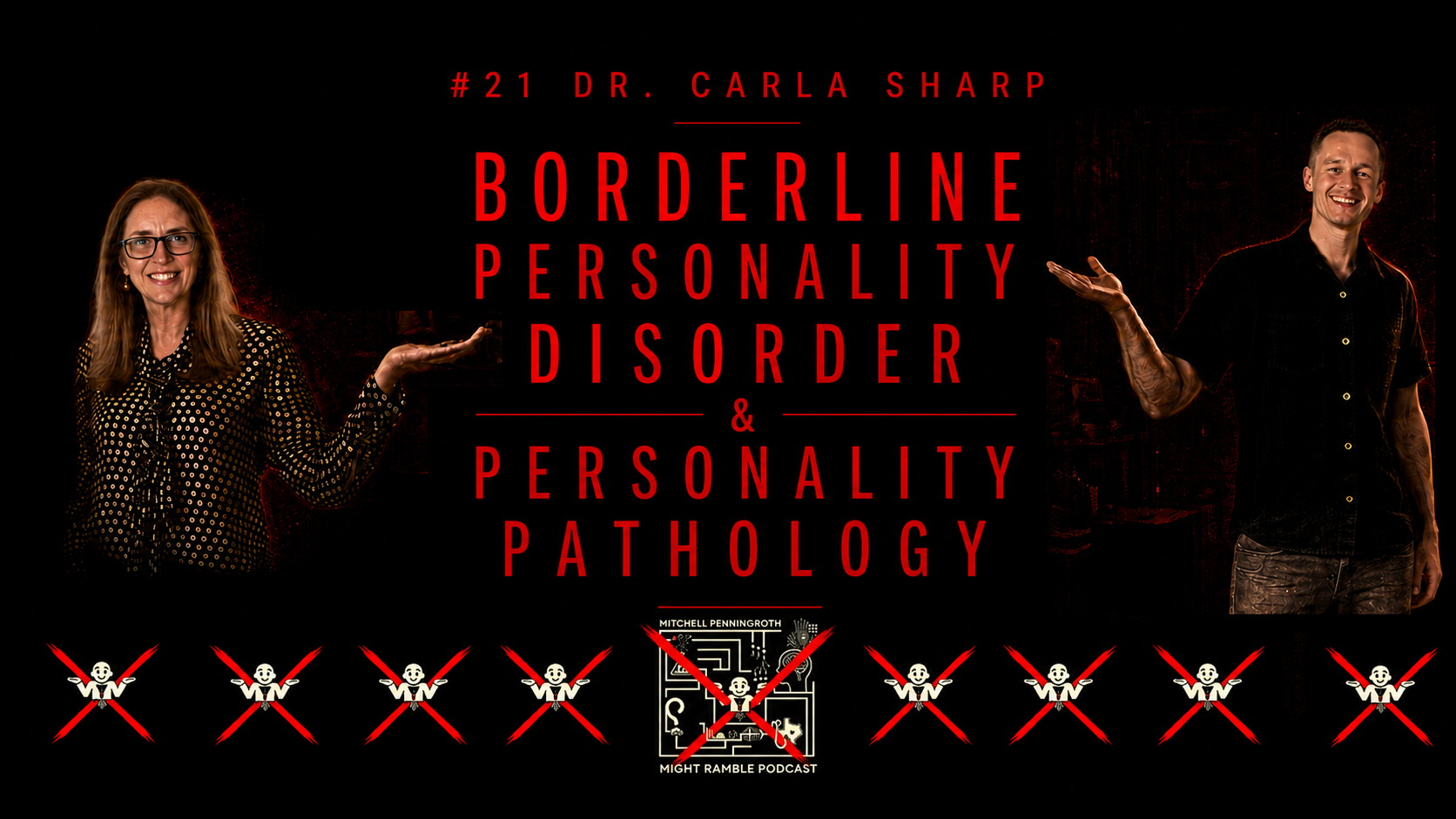
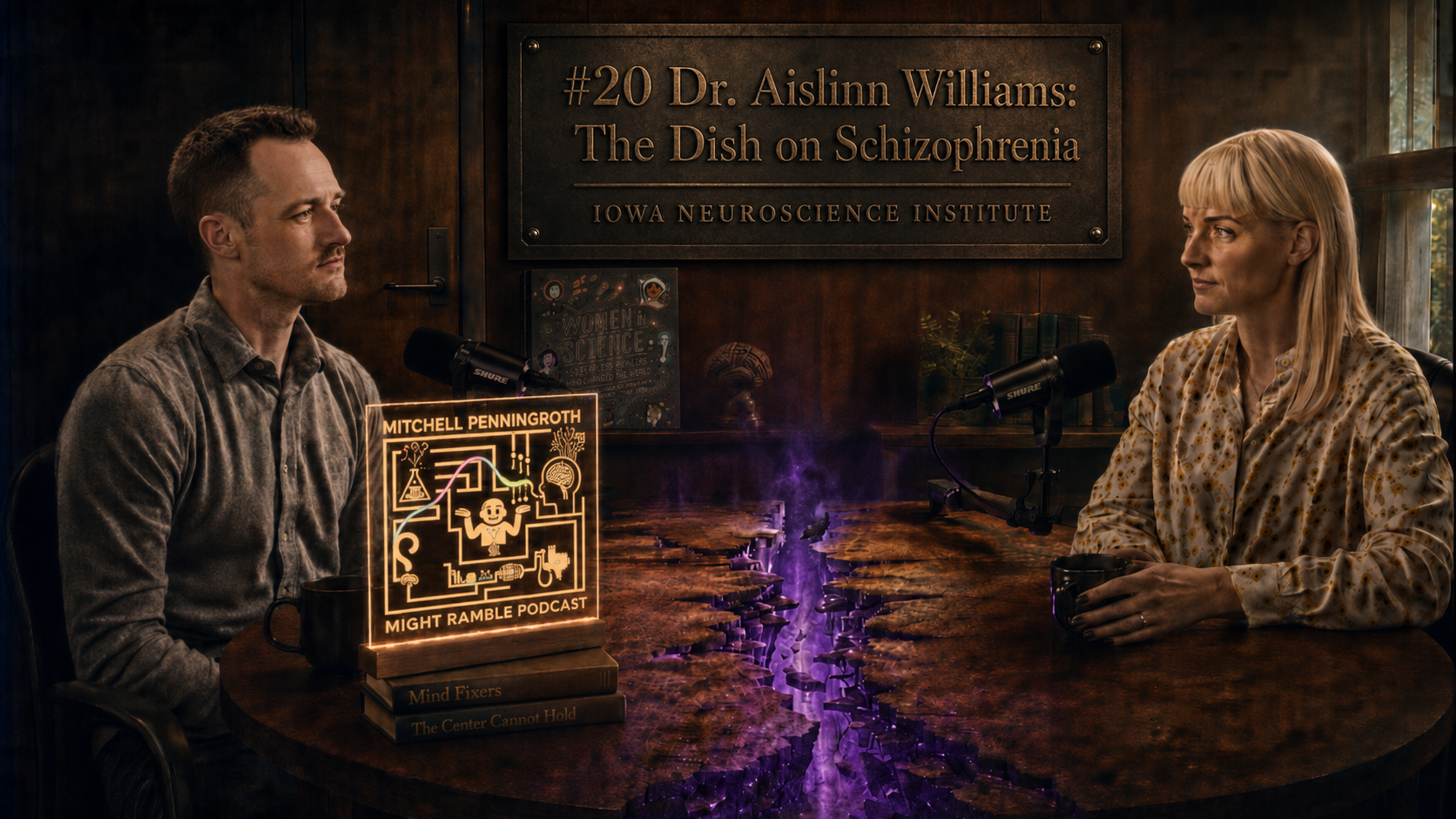
A FEW CONVERSATIONS TO START WITH

Meet the people behind the ideas.

FROM ACROSS THE TABLE

The conversation,
from the other chair.

A place for guests’ reflections on the conversation. Their words will appear here with their permission.

SUPPORT MIGHT RAMBLE

Help sustain
the work.

If an essay helped something click, or a conversation gave you a new question, consider supporting the next one.

Might Ramble is independently produced. Contributions help cover the practical costs of making careful, thoughtful work and the time it takes to keep doing it.

Support Might Ramble

Sharing a piece, introducing a thoughtful guest, or subscribing to the newsletter helps the work reach its next person, too.

WHAT SUPPORT MAKES POSSIBLE

The work behind
the work.

Equipment & production
Audio and video equipment, recording tools, editing software, and the everyday costs of publishing.
Training & craft
Developing the interviewing, storytelling, and production skills that make each piece better.
Travel & connection
Travel for in-person conversations and opportunities to learn from people doing meaningful work.
Time to make it
Research, preparation, writing, recording, and editing, alongside sustaining an independent creative practice.

GET IN TOUCH

Have a question
worth following?

For guest introductions, research or creative collaborations, and conversations about supporting the project, I’d be glad to hear from you.

mitchellpenningroth@gmail.com

KEEP THE CONVERSATION GOING

The next question,
in your inbox.

Opens in a new tab.