From the print edition · Original text and illustrations
This was an adventure.
One of my goals this year was to travel to interview someone, in addition to having a certain number of academics on the show, and so I set out to achieve these goals.
Something I’ve learned these last 10 months of being sober is that I need to do things that thrill me while sober. Addiction is all about changing how you feel on your terms rather than on life’s terms — in a sense, you try to play God. An active addiction is a monster to deal with, and yet, it’s not all bad.
As a stimulant (+) addict, I loved that I could take something that would make life thrilling on- demand. You don’t have that false luxury in sobriety, which means you have to actually go and do thrilling things to feel that way. To scratch the itch, so to speak.
So, I’ve gone to work on identifying sober experiences that make me feel thrilled. Where, exactly, is the edge of life from which I can retreat safely? For whatever reason, the process of finding someone to potentially interview for a specific purpose, contacting them, preparing to interview them, doing whatever it takes to make the interview happen, and then actually interviewing them is both thrilling and meaningful to me. I love it. A quirk, I suppose, and it feels entirely “me”. Some people people watch, and others study people, apparently.
After episode 15 with Micky Marinelli, I talked with her about finding someone to discuss GLP-1s in relation to addiction with. For context, I began taking a GLP-1 for addiction in August 2025 or so after following anecdotal reports along these lines for years and reading some literature. I thought there was a realistic possibility it might make it 20-40% easier for me to remain sober over the next year. Seemed worth a shot, pun intended — no more cornfield, please. So far so good.
Micky and I couldn’t think of anyone locally in the Austin, TX area that was quite right for this discussion, and she hadn’t considered that perhaps I’d be willing to travel to someone, so Dr. Lorenzo Leggio didn’t come up. I was unaware that Micky (from Italy) and Lorenzo (from Italy) know each other well.
After some googling, I cold emailed Dr. Lorenzo Leggio — the Clinical Director at the National Institute on Drug Abuse, one of the most prominent addiction researchers in the country, and one of the scientists who first started connecting GLP-1s to alcohol use disorder over a decade ago. I’m a 29-year-old with a podcast that had less than 25 followers when I emailed him. I figured odds were low. But fuck it, what did I have to lose? At worst, he wouldn’t respond, and I’d be in the same boat I was already in — find an expert to talk about this topic with.
Luckily, he (well, his assistant) responded, and said Dr. Leggio would be down to chat. Virtually was available, but I requested in-person (always go for in-person), and so we scheduled for April 2nd.
This meant between the beginning of March and the beginning of April, I needed to figure out how to travel with a mobile set of video and audio equipment that I could set up efficiently and competently — Dr. Leggio is a busy guy and I’d only have him for a small chunk of time, so I didn’t want to burn an hour fumbling with cables and cameras upon arrival.
I also needed to gain sufficient technical breadth on GLP-1s — what is known about their relationship to addiction thus far, where the space may be headed, how Dr. Leggio fits into this picture — on top of the many hours figuring out how I’d want to go about such an interview. I needed to figure out how to talk to one of the top addiction scientists in the country as someone who’s both studied the science and lived the disease. If you’ve ever crammed for a test where there was a lot of uncertainty about what would be on it, that’s what all this felt like.
I also had another episode scheduled within the month (#16) and a full-time job, so March was going to be packed. Only one way through, hunker down and go to work.
Booked my flights — would be a quick trip. I was flying to Baltimore for one thing and one thing only: to do this interview.
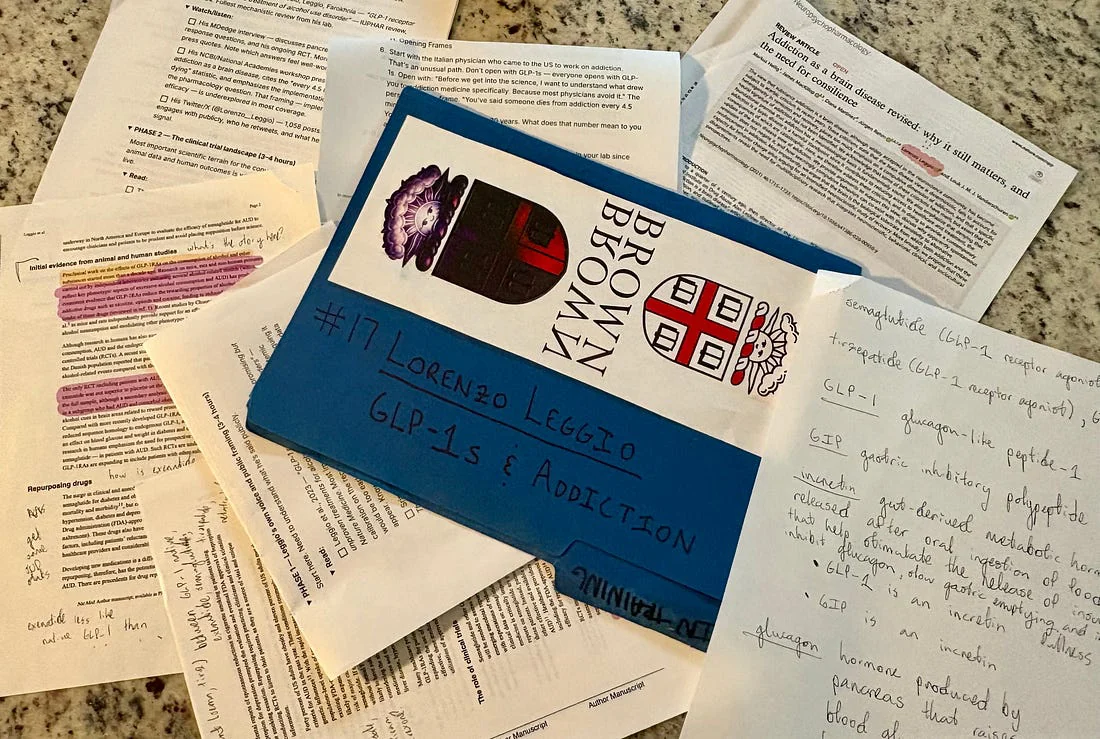
The day before the interview (travel day), I got up and packed my bags.
I surprisingly figured out how to get all my audio and video equipment into a single carry-on bag, and I would have my backpack as well. Love me a personal item. But first, prior to leaving town, I had therapy.
I figured the most helpful version of therapy for me that day would be to practice being a one- man rapid response team for audio and video setup while maintaining conversation. Trying to socially appease a stranger prior to an interview while simultaneously trying to set up this type of equipment is more difficult than you’d anticipate. Mentally it feels like wires are tripping or something. Don’t recommend but I’m happy to start a support group for those facing such challenges and share my experience, strength, and hope.
I was planning to surprise my therapist with this whole “impromptu setting up of equipment while conversing” that I needed to practice. As fate would have it, she surprised me. We were locked out of the office, so therapy was perhaps not going to work that day, unless I wanted to go somewhere nearby and spill at like a Starbucks or something.
Surprise me with office unavailability? I’ll surprise you back. I told my therapist, “This is going to sound weird, but just hear me out — what’s your car situation? I fly out to Baltimore today to go and interview this guy, and I need to practice setting everything up rapidly while maintaining conversation.” (I was thinking maybe we could talk while I set everything up in one of our cars in the parking lot).
As we got ourselves situated, somehow we shifted into seeing what was up at that nearby Starbucks, and then unexpectedly, it was upon us — a Denny’s. Hadn’t been in ages, would be iconic to go in there and set up shop in one of the booths.
So that’s what we did. As copious amounts of equipment began emerging out of my bag within the sanctuary that is a Denny’s, onlookers were abound. Pay no mind, let me practice this in peace, please. I explained (dishonestly) to the Denny’s staff that I was interviewing the woman across from me (my therapist) because she was running for office in the upcoming midterms.
After Denny’s, I went to work as if everything was normal. Got done with work. Then to airport with my carry-on and backpack. The carry-on bag was so heavy that I came home from the trip with a bruised shoulder from it, sore obliques, and feeling like I hit legs for the first time but only the hip flexors. Was not expecting to return home bruised and battered. Content creation requires physical sacrifice, apparently — love functional fitness.
I got into Baltimore around 1AM (interview was at noon), slept in the airport for a few hours, made myself presentable in a dirty, forlorn airport bathroom, colonized an airport concierge help station that lacked an employee, and made my final preparations. I. Would. Be. Ready. For. This. Interview.
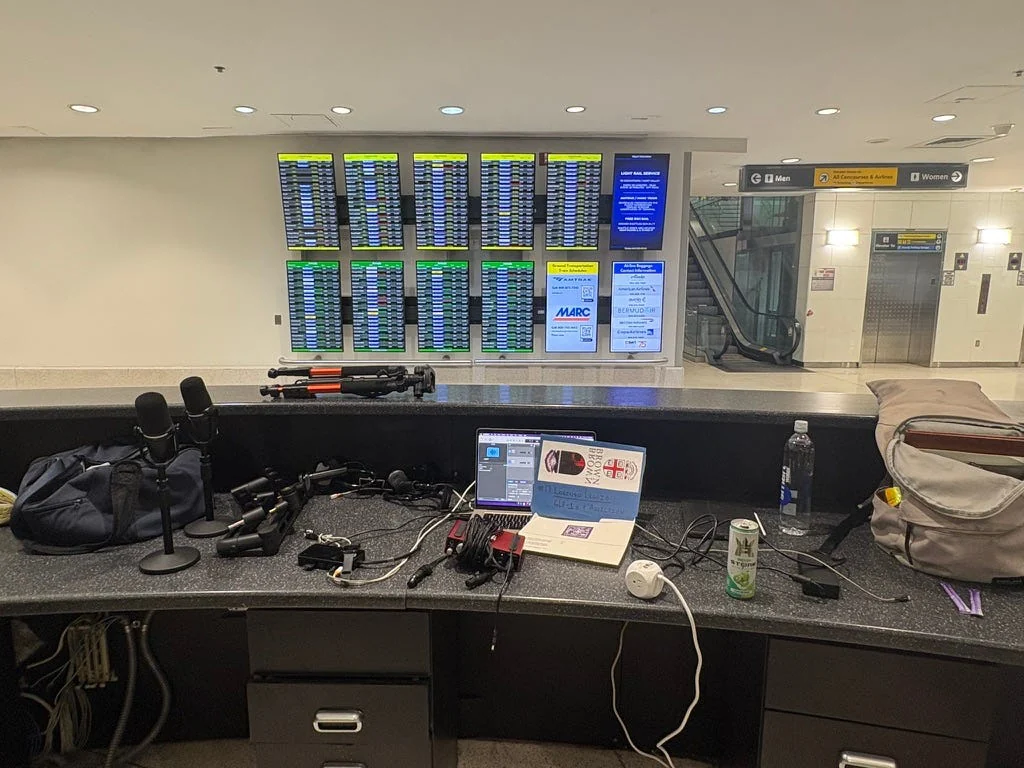
During my time in the Baltimore airport, I thought of my dad a lot — the lengths he’d go to make things happen how and when they needed to happen. I was running on adrenaline and worried I was tired enough that I wouldn’t be able to intellectually hang with Dr. Leggio. One quick search of this guy and I knew I might get intellectually trounced by him under the best of circumstances, let alone the ones I was working with.
In my colonization of the concierge station, I probably had 25 people ask me if I could help them with something — I kept telling them, “I actually don’t work here, so sorry.” I was trying, perhaps, to do my part in helping staff US airports during a time when such staffing was lacking. It also was good social priming before the interview, practicing the art of talking to strangers. Like my dad stretching for an hour prior to actually working out for 30 minutes.
From there, I went to the NIH. In the lobby, it was bizarre to see glistening portraits of governmental leaders that have taken a wrecking ball to the national research apparatuses, while being within where the wrecking ball has been hitting. Vannevar Bush wouldn’t have it!
In such a place as the NIH, you also have to pass through security. Out with the belongings. Internally, I was like “Please let’s not unpack the recording bag, it’s a lot.”

Got through security. Ok, cool. Up the elevator we go, and into the Lion’s Den — 12 years into battling addiction, a part of myself I kept hidden for a long period of time early on in dealing with it, and here I was finally at the National
Institute of Drug Abuse to discuss my story openly and on camera with a highly respected and well-known physician scientist.
And that’s how this episode came to be!
Some context for those unfamiliar with his work. Lorenzo trained in internal medicine in Rome, where he saw firsthand how patients with alcohol-related liver disease were treated with far more stigma than patients with any other condition on the same hospital floor. That experience — and specifically the cognitive dissonance of watching surgeons happily transplant livers for hepatitis patients while pushing back on “alcohol addicts” — redirected his career toward addiction science. He did his postdoc at Brown University’s Center for Alcohol and Addiction Studies, built a research program there, and then was recruited to the NIH in 2012.
His research sits at the intersection of addiction neuroscience, endocrinology, and the gut- liver-brain axis. The core idea: the brain doesn’t work in isolation. It’s in continuous, bidirectional crosstalk with the body — and understanding those body-brain connections might be the key to developing better treatments for addiction. His lab published some of the first human data linking the GLP-1 system to alcohol use disorder back in 2015, years before anyone outside of diabetes clinics had heard of Ozempic. His early work on GLP-1 receptor genetics and alcohol, alongside collaborators like Elisabet Jerlhag in Gothenburg, helped lay the scientific groundwork for what is now one of the most active areas in addiction medicine — whether GLP-1 receptor agonists (the same drugs reshaping obesity treatment) can be repurposed for substance use disorders.
That’s who I cold emailed with my 25-follower podcast.
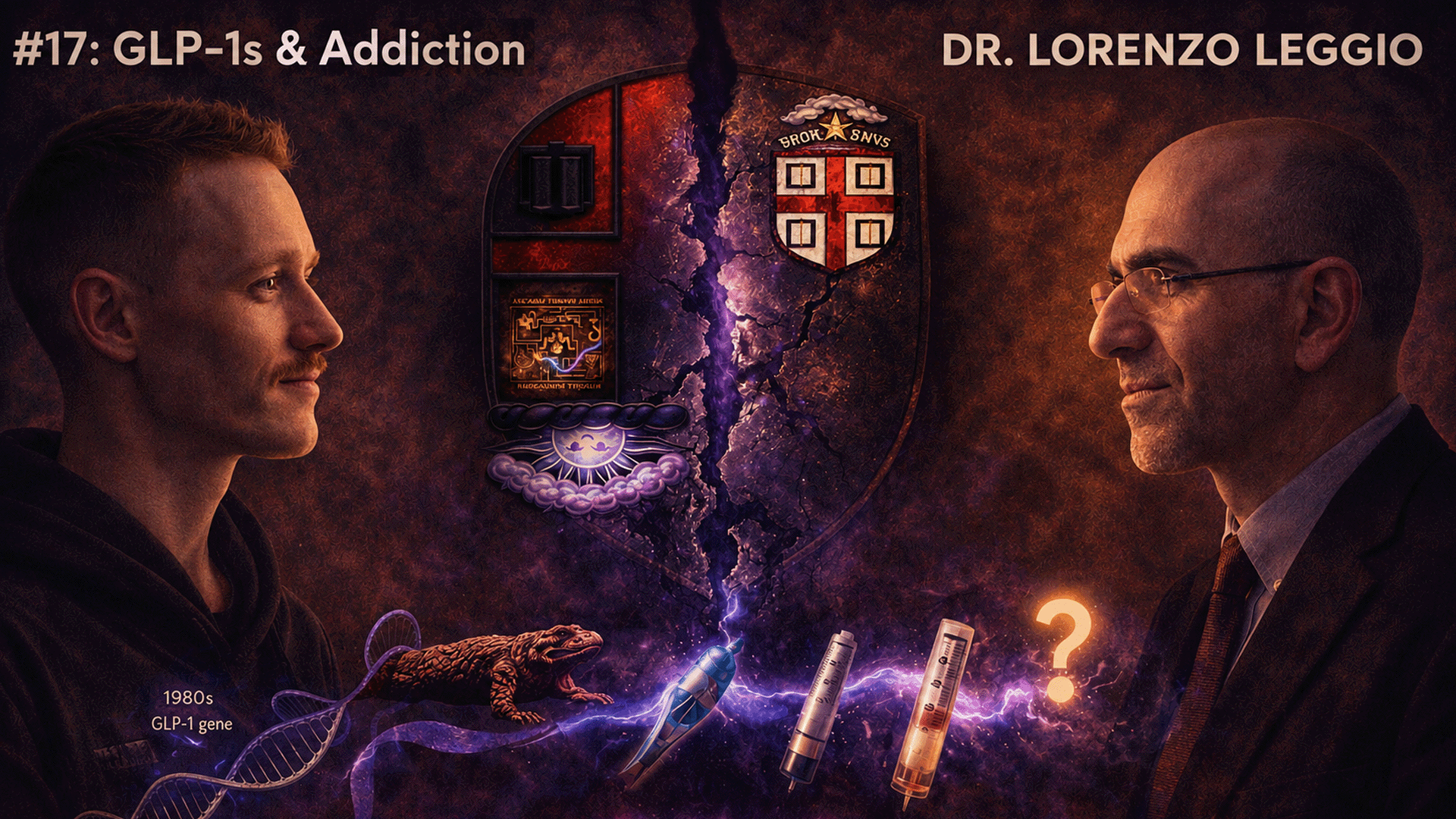
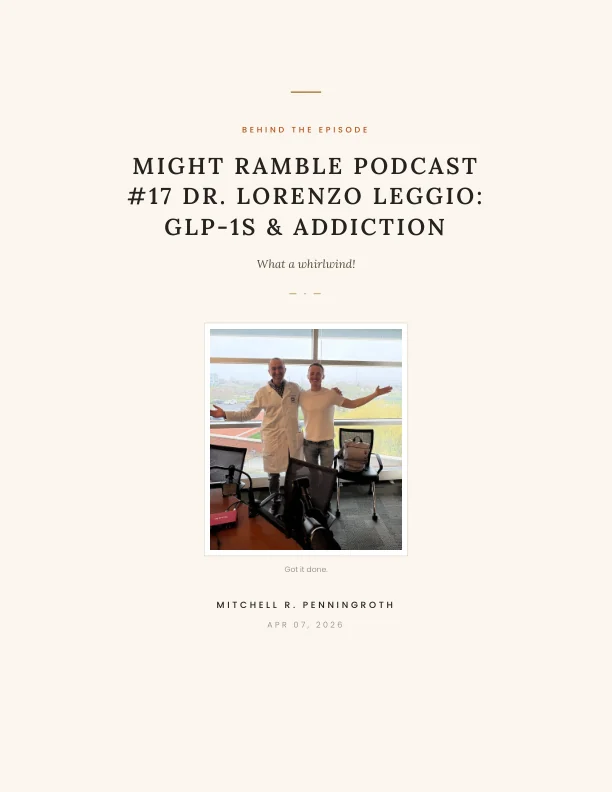
Listen to #17 Dr. Lorenzo Leggio: GLP-1s & Addiction wherever you get your podcasts.