From the print edition · Original text and illustrations
Part I: Introduction
Eleven years ago I chose to try a drug — Vyvanse. I remember the moment it hit and thinking, almost verbatim, Oh my god, this is how I’ve always wanted to feel. Where has this been my entire life?
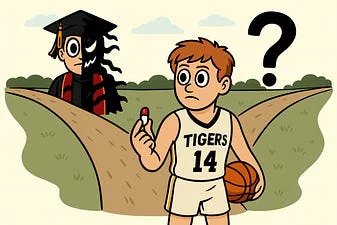
From there, I’ve been on an unexpected journey — a winding, circuitous path full of ups and downs and, in some ways, many lives lived. Perhaps I will share more of my story in future writing. The point is, I chose to try the drug, but I did not choose — nor did I consent to — having the primal parts of my brain rewired the way they are in addiction.
Who would?
In order to overcome addiction, one day at a time, I’ve had to confront a deeply humbling truth. I am powerless over my ability to use mood-altering substances in a controlled, sustainable way.
Left to my own thinking, patterns, and impulses, I make decisions that ultimately destroy my well-being. It is not a matter of willpower — it’s about recognizing that my internal compass, when it comes to having a healthy relationship with mood-altering substances, does not function like a normal human. My compass in this regard is permanently defective, although it is not for me to determine that for anyone else.

The term craving perhaps scratches at what it can feel like (I
My addiction has carried me through some unexpected places:
think we need a different term for what I describe here) —
from the University of Iowa, to
over time, the drive to use becomes as deeply wired as an
working blue-collar jobs in sober
instinct. Repeated substance use rewires the parts of the
living as a college dropout, to the University of Minnesota, to research
brain that control survival drives — the same primitive areas
labs, to multiple treatment centers,
that push you to eat when you’re starving or drink when
and eventually to Brown University. In truth, nearly everything that
you’re dehydrated. These circuits sit deep in the brain, below
came after Iowa was shaped — for
conscious thought, and they fire off automatic urges long
better and for worse — by my addiction.
before reasoning can catch up.
What happens when you get really hungry?
What would you be willing to do if you hadn’t eaten for ten days?
Most people would do whatever it takes — even lie or steal — to get food. At some point, the need for fuel outweighs the moral guardrails.
It’s not that I don’t have morals, it’s that I’m not a saint capable of denying basic instincts. That is what addiction can feel like, and it explains why people caught in it act the way they do. The instinct isn’t for food or water — it’s for the substance. You crave it the way you crave air after holding your breath too long.
To be fair, addiction exists on a spectrum in how intense this drive becomes. And while it isn’t my fault that I was handed this particular burden, it is my responsibility to address it. For those walking this path, the hard truth is that it often gets worse before it gets better. I personally had to be thoroughly beaten into a state of reasonableness.
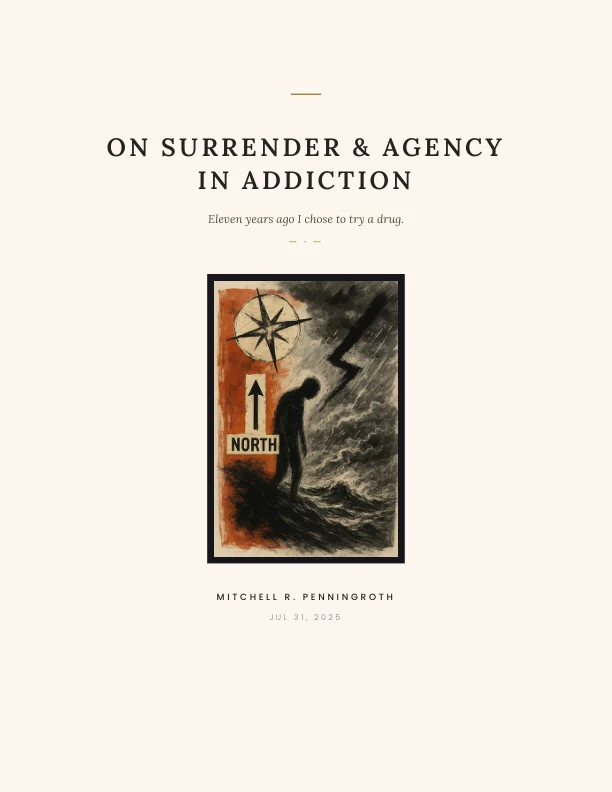
Next, imagine there is a horrendous storm evocative of The Day After Tomorrow heading north from Texas. You happen to find yourself, in, say, Missouri. You know objectively that the storm is moving toward you and that you should keep heading north. But at unpredictable moments, your compass flips — north reads south, south reads north — and it doesn’t exactly send you an iPhone notification when it happens. Confused and delusional enough to believe you’re still heading the right way, you march straight into danger without realizing it until it is too late. You fail to move north fast enough, and the storm overtakes you. This is what we call a relapse.
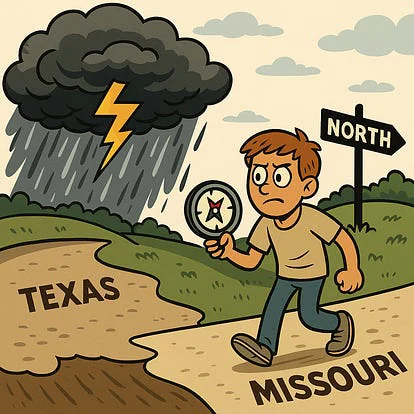
This is the reality an addict lives with — cravings that can strike like survival instincts and a compass that can suddenly flip without warning. Left to
my own devices long enough, I lose my bearings — the storm catches me every time. I find myself stranded in the middle of a storm, unsure how to proceed except by reaching for something to control the way life feels.
So if I can’t trust my compass, and I can’t outmuscle the storm on willpower alone, what do I do? I need a system that helps me work against my own natural inclinations when they’re leading me astray — bowling with the bumpers up, so to speak. But how do you build something like that?
The answer is perhaps counterintuitive. The only way forward starts with surrender — fully realizing that I am not in control when it comes to mood-altering substances. In truth, the substance controls me. If I am willing to compromise with my morals and values in relation to a substance, I am not in control. It has me.
On the surface, surrender seems like giving up, yet it’s the opposite. It is in this admission that I begin to reclaim solid ground on which I can build. Without surrender, trying to create a meaningful life is like building on land that never stops shaking. I may manage to put up something interesting for awhile, but it always crumbles because the foundation itself is unstable.**
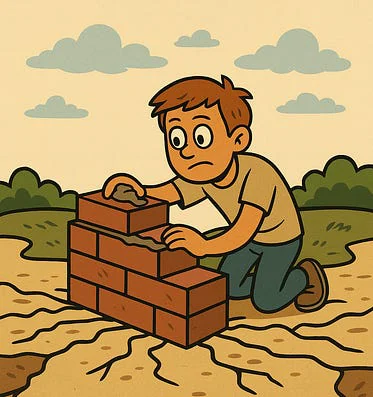
This is the paradox of powerlessness. The first step is admitting “defeat” — fully accepting that I cannot master the substance because it has mastered me. In that admission, I stop fighting a battle I cannot win and finally let go of the illusion that total self-reliance is the way forward.
Recognizing this truth opens me to help from others and to a way of living no longer marked by isolation, self-seeking, deception, pride, ego, or keeping score. Those are all ways of keeping me separate — where I can be convinced, yet again, that my compass is not defective.
Before this shift, taking advice from anyone feels almost impossible. When the ground is constantly shaking and I still believe I might somehow manage to control my use — or that using is necessary for survival — life feels like clinging to a collapsing building that you’re trying to build. It’s noisy, disorienting, and I’m too busy bracing or planning for the next tremor to truly hear anyone calling out instructions, let alone trust them. After all, they’ve probably got inaccurate information — more on that later. This generally, I would imagine, shows up as a type of selfishness and distancing from the outside looking in.
But when I surrender, become abstinent, and release the illusion of total self-reliance, the ground begins to steady. Even after the substances are out of my system, I still carry deeply ingrained habits of believing I can handle everything on my own — the I’ll figure it out mentality, the I’m good now mindset. Years of relying on myself — hiding, minimizing, controlling — don’t disappear just because I’m sober.
Abstinence doesn’t mean I suddenly snap back to normal.
With stability under my feet and a consistent vantage point to look from, I can finally recognize those patterns for what they are, pause, and begin to look around, listen, and take in the counsel of others — a sponsor, a trusted confidante, a therapist, a recovery group, or even a spiritual practice. Their collective wisdom, greater than my own, helps me build a structure sturdy enough to support better choices and withstand future storms. I am used to trying to build with the ground shaking, so the prospect of building otherwise is foreign and terrifying in its own way.
Tom Hanks in Cast Away (his name is Chuck in the movie) provides a fitting metaphor for what this journey has been like. At some point, he had to choose to live — even without knowing how — and quietly reckon with the fact that no rescue was coming. This came for me 9 years ago. That choice isn’t cinematic or triumphant. It’s quiet, lonely, and deeply personal. For me, it meant waking up day after day and deciding, again and again, to keep rowing toward a shore I couldn’t yet see. Thankfully, the shore is coming into view.
If successful, like Chuck, he returns to shore — not on the sleek plane that crashed, but sailing home on the makeshift raft he pieced together from whatever scraps he could find,
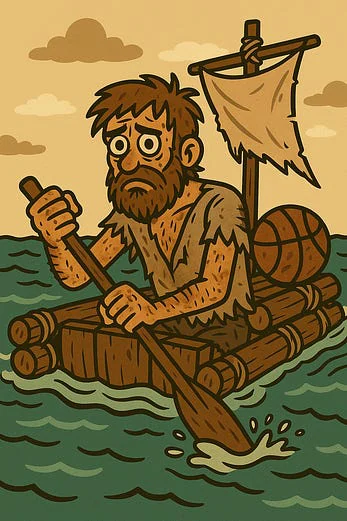
with some help from others to finally reach land. He isn’t the
I am become Chuck of Castaway, maker of rafts, companion of a
same man who left, yet in a sense, he comes back to himself.
basketball though rather than
Through humility, resourcefulness, and surrender to his
Wilson the Volleyball.
circumstances, he manages to patch together something functional enough to carry him where he needs to go — to a place where others can help him from there.
Addiction forced an unusually early confrontation with questions most people can postpone.
Who am I?
What do I actually live for?
What matters?
I was trapped and couldn’t get out — do I keep trying, or do I give up?
A sincere reckoning with those questions leaves you changed. The deeper the suffering, the deeper the meaning you must uncover if you’re to keep going. Without it, you’ll crumble. With it, you begin to move forward, step by step, although it may not always appear that way to others. This is how I ended up a scientist.
Even though the day-to-day work is personal — no one else can row for me — the raft itself is built from what others have given me. Namely, their wisdom, guidance, and support. I may be paddling alone, but I am not truly alone.
Approaching recovery this way allows me to show up authentically for what matters most — the parts of life that foster healing, growth, service to others, and lasting stability. I get to be who I truly am, no longer shackled to something I never intended to be chained to.
This only works with full honesty though. If I misrepresent my reality to others, they cannot help me effectively. It’s like saying I’m in Missouri when I’m actually in New York — no one can give me accurate directions if they don’t know where I really am. And, well, you know what they say about Americans and geography. I guess I’m working on it.
If I surrender, get honest with others, and ask for help, my life gradually becomes more manageable. I grow more capable and begin acting in ways that reflect agency, self-respect, and my values rather than a path leading to self-destruction — no longer trying to build in the middle of an active earthquake zone. Returning to the storm analogy, I can still head north even with a defective compass, trusting that north remains the right direction because others are close enough to notice when I veer off course and guide me back. For me, real agency does not come from raw autonomy or stubborn self-reliance. It comes from the humility to admit my limitations and let others help reshape the framework I use to make decisions.
Let’s untangle this just a bit more.
First, addiction fundamentally distorts decision-making capacity — it hijacks motivation systems, disrupts long-term planning, and strongly biases immediate relief over sustainable wellness. Addiction says, “I cannot feel this way. I must use to control how I feel,” while also saying at times, “I need to feel more of this way. I must use to maximize how I feel.” With a worldview like that — shaped by brain circuits far older than what we experience as conscious reasoning — it becomes almost impossible to navigate life in a way that consistently supports long-term well-being. Autonomous decisions made within the context of addiction, therefore, are often maladaptive or harmful.
Second, letting go of the belief that “I alone can fix this,” or “I alone can find a way to use and control life,” is not weakness — it is an accurate acknowledgment of impaired functioning in a specific domain. The Lord of the Rings provides a fitting analogy. Frodo, limited by his small stature and lack of magical power (in my head, I say his Hobbitness), is tasked with destroying the One Ring — a metaphor here for living a purpose-filled life while walking a perilous path where many before him have failed. One does not simply walk into Mordor (poor Sean Bean).
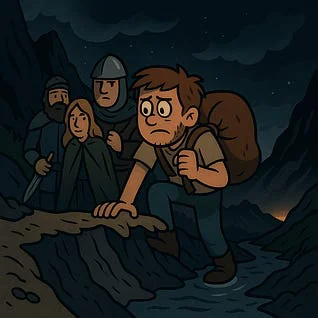
Frodo succeeds not because he powers through alone, but because he surrenders to the reality of his limitations and accepts that he cannot reach Mordor unaided. By leaning on the Fellowship — a diverse support system offering protection, guidance, and encouragement — Frodo can strategize effectively, endure suffering, and stay on the path. In the end, this surrender to help does not diminish his agency. In fact, it amplifies it, enabling him to complete his quest and grow into a stronger, more capable version of himself.
Third, by surrendering to the need for external guidance, functional feedback loops such as social accountability, reality checks, and learning substance-free emotional regulation can be established (or re-established). Over time, with abstinence, these loops strengthen and reinforce healthier habits — the same principle applies to drug-seeking behavior, abstinence and new routines can weaken old circuits. The result is gradual improvement in the brain’s capacity to make decisions aligned with long-term aspirations and values-based living. Neuroscientifically, what fires together wires together. There’s a reason you can drive without thinking much — you’ve done it many times. The wiring is strong. Likewise, there’s a reason why trying to write with your off-hand produces handwriting no better than a kindergartner’s — you lack the wiring, through lack of repetition, to produce the fine motor movements that enable legibility.
In summation, in addiction, surrendering leads to restored self-agency — not through dominance over the problem, but through the formation of a new internal-external framework that eventually enables sound decisions.
In my life, surrender begins with the 3 hardest words for someone like me to say: “I need help.” Recovery is the art of never declaring, “I’m fixed now,” because there is no permanent cure — only a daily reprieve. This daily freedom is ongoing, sustained only as long as I stay honest and connected. When I surrender to not doing this alone, I hand the wheel to something steadier than I can produce by myself. Paradoxically, that act of letting go is what makes the path forward mine again.
E D I T O R I A L N O T E S / F O O T E R S :
*Why would I write this piece and post it publicly? Don’t I understand that drug use and addiction is stigmatized, and that this could have consequences for me?
I decided to write about this publicly for a variety of reasons:
1. Most importantly, I hope this may be of help to someone struggling the way I once did. Be the person you wish you had, right? There is nothing more meaningful to me than offering support to someone blindsided by life’s severity, simply by sharing my own experience honestly — something I’ve been fortunate to be able to do. For a long time, I couldn’t make sense of why this happened to me. But when you can use it to help someone else, the point becomes exceptionally clear.
2. Addicts, until they’ve sought help and heard others share their stories, often believe they’re uniquely burdened with problems no one else could understand. I remember being 18 or 19 and thinking that even if I tried to get help, no one would be able to assist me — my issues felt too specific, too complicated. No one would understand. Fortunately, I was completely wrong. In truth, I’m a fairly run-of-the-mill addict in how my mind relates to substances. I didn’t realize that until I listened to
others share their stories. Eventually, I’ll write out my own story in greater detail to contribute to this cycle of honesty and connection.
3. I also remember thinking at 18 or 19 (and plenty of times later) that if I ever sought help — help I didn’t believe would work anyway — there would be irreparable consequences to life as I knew it. My social life would be shattered, people I cared about would see me differently, and from then on I’d be handled with a kind of kid-glove pity. I expected to be judged and shamed as “weak,” “unable to control myself,” even branded a liar, cheat, and thief — which, to be fair, is part of being an addict as I’ve described elsewhere. Much of this did happen. But do I want others to have to endure that same moral shaming? No. I want them to be able to get the help they need with as little harm as possible. I can’t control how society responds, but I can do my part by owning that I am an addict and refusing to be shamed into silence out of fear of judgment. After all, though it’s a different disease and maybe an oversimplified comparison, do we shame people for having cancer?
4. People who aren’t addicts often struggle to understand why the hell addicts act the way we do — and understandably so. Still, in my view, addicts are not inherently ‘bad people.’ Like anyone else, we fall along the character spectrum, especially when we’re not actively using. I feel a responsibility to help explain to non-addicts why I (and many others) think and act the way we do. Addiction can destroy families, burn down relationships, and wreck lives. It makes sense that non-addicts get angry. Yet if I can help others better understand the addict’s situation, maybe I can reduce some of the collateral harm addiction causes. Anger, after all, is often the deepest form of care — but it’s harder to stay angry once there’s understanding. None of this excuses the behavior of addicts. It simply offers context.
5. There’s a concept called self-binding, something I’ve tried to practice ever since accepting that I have the disease of addiction. Put simply, how can I structure my life to protect myself from myself and reduce the odds of slipping back into active addiction — or staying stuck there for long? One form of self-binding is making sure others know I’m an addict. It’s harder to hide or deceive when you’ve already gotten out in front of the addict self. To return to the analogy from earlier: this is me letting people know I’ve got a perpetual storm chasing me. That way, it becomes much harder to convince anyone — including myself — that there’s no storm on the horizon. Writing this publicly is another form of self-binding. Whatever judgment or consequences come from being open about it don’t outweigh the protection I gain by refusing to hide.
** There are wounds and traumas that can happen which are not an addict’s fault, even if they’re struggling with addiction. Healing from those experiences often requires more than simply “cleaning up your side of the street,” and I plan to write more about that tension in a future piece. The same applies for certain mental health conditions.
*** I had AI proofread this piece for grammar and scientific accuracy as far as language used. I do not want to provide “bad info” in my writing. Minor edits were suggested, reviewed by me, and then either incorporated or not. I am still figuring out my exact relationship with AI in regards to writing, in addition to the voice I wish to use in my writing. If you would like more information regarding the use of AI here, please reach out to me.
**** This is my perspective regarding addiction. Others may vary.