From the print edition · Original text and illustrations
Hello everyone. It’s been a bit since I’ve published any writing. Anyways, I have joined a writing club here in Austin, TX, and this is a small upcoming feature where I was asked to answer a few questions!
What is a question worth asking?
If you never had to worry about money, how would you live your life? How differently would you live? Not in terms of luxury, but rather where would you place your attention and effort? What actually matters to you? The most meaningful contributions I can make will likely stem from pursuits that I care about, independent of money. Obviously, money matters, but this question has helped orient myself time and again. Whoever I am without money is who I will be with money — money magnifies who you are, like the Super Mushroom power-up in Mario.
What is a concept worth understanding?
Exercise-induced neurogenesis. For a long time, there was this notion that once born, the brain has a fixed number of neurons, with no new ones being made. There is emerging evidence that this is not exactly true.
Adults have the ability to generate new neurons at minimum in the hippocampus (you can think of the hippocampus as the brain’s mapmaker and archivist, helping you make new memories and linking experiences to their overall context). This is great, with one caveat — much of this ability seems to be dependent on regular exercise.
What is a book worth reading?
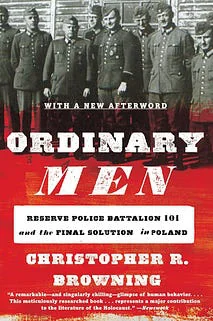
Ordinary Men had a big impact on me when I was in my early 20’s. Germany was a westernized society — not all that dissimilar than the US. I had long wondered how did people who were seemingly good (although as Solzhenitsyn wrote, “the line dividing good and evil cuts through the heart of every human being”) end up participating in the atrocities of the 1930s and 1940s?
This book examines that exact question. It follows a battalion of white collar German men who, prior to enlistment, were ordinary, upstanding citizens. It follows their collective psychological
transformation as they were asked to commit increasing amounts of
I read this book 6 years
evil as World War II progressed. Who participated, and why? Who was
ago, and still think about it regularly. Some men
able to resist group pressure, and what allowed them to say no? And
have a thing for the
how can I be more like the people who refused to cooperate, even
Roman Empire, and some for WWII. And
when everyone around them went along?
some have had flings with both!
What is an activity worth doing?
Riding e-bikes with others for a day in Glacier National Park. Endorphins combined with the breathtaking seemingly never-ending beauty made me feel like I was in a dream in the best way. I was like, is this a simulation? Is this real? Am I a kid again who has run into a completely novel experience? It felt a bit like the first time I glimpsed the open world of Skyrim when I was 16. Simply astounding.

What is a newsletter worth subscribing to?
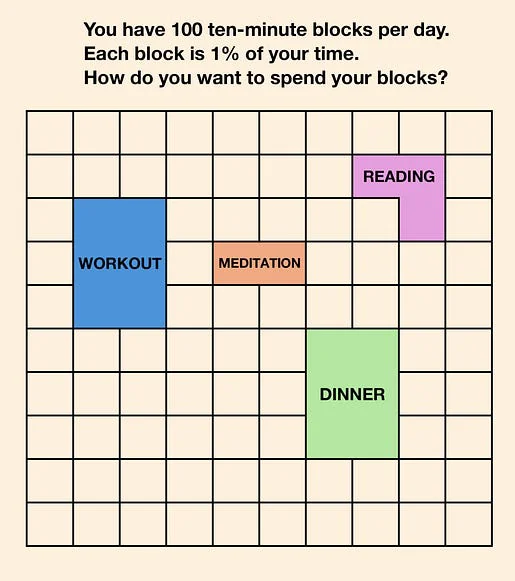
Wait But Why. You never know when there will be a new post. It could be weeks, months, or years — but! — whenever Tim Urban has something to say, you can count on it being entirely original. He’s got a way of thinking about things that always provides new lenses through which to view the world. For example, every day you have about 1000 minutes of being awake. This means you have 100 10 minute blocks per day. Each 10 minute block is 1% of your day, how do you want to spend those blocks? (Link: https://waitbutwhy.com/ 2016/10/100-blocks-day.html)